
The Values on a Erie County Property Record
Every Erie County property value carries a label. It is either a land assessment, a total assessment, a full market value, a taxable value, or the consideration written into a deed. The roll year, the assessing unit, the ratio, and any exemptions give each figure its meaning.
| Value | What It Is | Where |
|---|---|---|
| Assessed value | An Erie County value must be labeled as land assessment, total assessment, full market value, taxable value, or recorded consideration. The year, assessing unit, ratio, and exemptions give the number meaning. | An Erie County value must be labeled as land assessment, total assessment, full market value, taxable value, or recorded consideration. The year, assessing unit, ratio, and exemptions give the number meaning. |
| Market / appraised value | An Erie County value must be labeled as land assessment, total assessment, full market value, taxable value, or recorded consideration. The year, assessing unit, ratio, and exemptions give the number meaning. | An Erie County value must be labeled as land assessment, total assessment, full market value, taxable value, or recorded consideration. The year, assessing unit, ratio, and exemptions give the number meaning. |
| Last sale price | An Erie County value must be labeled as land assessment, total assessment, full market value, taxable value, or recorded consideration. The year, assessing unit, ratio, and exemptions give the number meaning. | An Erie County value must be labeled as land assessment, total assessment, full market value, taxable value, or recorded consideration. The year, assessing unit, ratio, and exemptions give the number meaning. |
| Land vs improvement | An Erie County value must be labeled as land assessment, total assessment, full market value, taxable value, or recorded consideration. The year, assessing unit, ratio, and exemptions give the number meaning. | An Erie County value must be labeled as land assessment, total assessment, full market value, taxable value, or recorded consideration. The year, assessing unit, ratio, and exemptions give the number meaning. |
Labels matter on every Erie County property record. A value might be a land assessment, a total assessment, a full market value, a taxable amount, or the consideration named in a deed. Only the roll year, the assessing unit, the ratio, and the exemptions give the figure meaning.
Looking Up a Erie County Property Value
Start with the label when you look up an Erie County property value. Land assessment, total assessment, full market value, taxable value, and recorded consideration each answer a different question. The roll year, assessing unit, ratio, and exemptions tell you which question the number actually answers.
- An Erie County value must be labeled as land assessment, total assessment, full market value, taxable value, or recorded consideration. The year, assessing unit, ratio, and exemptions give the number meaning.
- An Erie County value must be labeled as land assessment, total assessment, full market value, taxable value, or recorded consideration. The year, assessing unit, ratio, and exemptions give the number meaning.
- An Erie County value must be labeled as land assessment, total assessment, full market value, taxable value, or recorded consideration. The year, assessing unit, ratio, and exemptions give the number meaning.
- An Erie County value must be labeled as land assessment, total assessment, full market value, taxable value, or recorded consideration. The year, assessing unit, ratio, and exemptions give the number meaning.
- Assessed value
- An Erie County value must be labeled as land assessment, total assessment, full market value, taxable value, or recorded consideration. The year, assessing unit, ratio, and exemptions give the number meaning.
- Market / appraised value
- An Erie County value must be labeled as land assessment, total assessment, full market value, taxable value, or recorded consideration. The year, assessing unit, ratio, and exemptions give the number meaning.
- Level of assessment
- An Erie County value must be labeled as land assessment, total assessment, full market value, taxable value, or recorded consideration. The year, assessing unit, ratio, and exemptions give the number meaning.
What a Erie County Assessor Value Is Not
A number on an Erie County assessment record is not one universal value. Land assessment, total assessment, full market value, taxable value, and deed consideration are distinct figures with distinct meanings. The roll year, assessing unit, ratio, and exemptions decide which one you are reading.
Value vs price. An Erie County value must be labeled as land assessment, total assessment, full market value, taxable value, or recorded consideration. The year, assessing unit, ratio, and exemptions give the number meaning.
Erie County Value Fields
The phrase "Erie County property value" covers several different numbers. A parcel's land assessment, its total assessment, its full market value, and its taxable value all get called values. The consideration stated in a deed also gets called a value. Each answers a different question. The assessment roll lists land, improvements, exemptions, and taxable amounts for a given roll year. Full market value comes from the assessor's ratio calculation. A deed may report the consideration from a transfer. That figure needs context. It is never a current appraisal. New York's official assessment-roll field explanation names the standard columns and what each one holds.
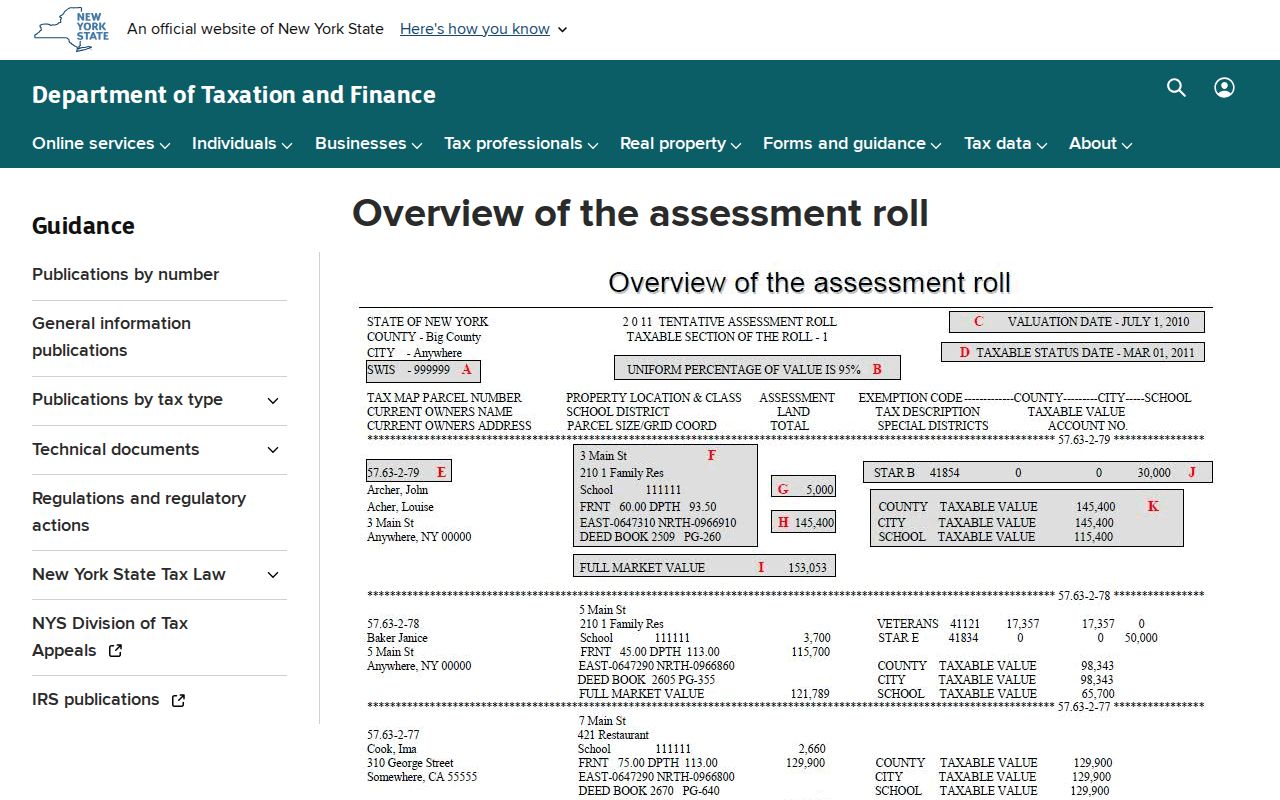
Always pair the number with its year, municipality, assessment level, and exemption status.
Reassessment Across Erie County
No single county assessor produces these numbers. Erie County is divided into assessing units: Buffalo, Lackawanna, Tonawanda, plus its towns and villages. Each unit keeps its own roll. State tables show Buffalo and Lackawanna with 2026 as their most recent reassessment. Tonawanda lists 2023. Buffalo now reassesses annually. It tracks neighborhood sales and inventory. The city also reviews each parcel's inventory at least once every five years. A rising assessment alone does not predict the next tax bill. The levy, the rates, any exemptions, and equalization all shape what you will actually pay.
Value is not an appraisal. An assessed or computed market value serves the tax system. It does not guarantee the price a buyer would pay.