
How to Find Who Owns a Erie County Property
Any owner name you find should be checked against the parcel number and legal description. The latest recorded deed names the true grantee for that Erie County property.
- An Erie County owner result should be confirmed by matching the assessment name and SBL to the grantee and legal description in the latest recorded deed.
- An Erie County owner result should be confirmed by matching the assessment name and SBL to the grantee and legal description in the latest recorded deed.]
- An Erie County owner result should be confirmed by matching the assessment name and SBL to the grantee and legal description in the latest recorded deed.
- An Erie County owner result should be confirmed by matching the assessment name and SBL to the grantee and legal description in the latest recorded deed.
Where Erie County Owner Information Comes From
Owner names in Erie County come from two places. The assessor's tax roll lists the owner of record, while the recorder's deed records prove how title was actually taken.
| Source | Owner Info It Gives | Access |
|---|---|---|
| Assessor / tax roll | An Erie County owner result should be confirmed by matching the assessment name and SBL to the grantee and legal description in the latest recorded deed. | An Erie County owner result should be confirmed by matching the assessment name and SBL to the grantee and legal description in the latest recorded deed. |
| Recorder deed index | An Erie County owner result should be confirmed by matching the assessment name and SBL to the grantee and legal description in the latest recorded deed. | An Erie County owner result should be confirmed by matching the assessment name and SBL to the grantee and legal description in the latest recorded deed. |
| Secretary of State | An Erie County owner result should be confirmed by matching the assessment name and SBL to the grantee and legal description in the latest recorded deed. | An Erie County owner result should be confirmed by matching the assessment name and SBL to the grantee and legal description in the latest recorded deed. |
| GIS parcel viewer | An Erie County owner result should be confirmed by matching the assessment name and SBL to the grantee and legal description in the latest recorded deed. | An Erie County owner result should be confirmed by matching the assessment name and SBL to the grantee and legal description in the latest recorded deed. |
Rolls go stale, though. The deed index at the county clerk is the authority on who holds each Erie County parcel now.
What "Who Owns This Property" Cannot Tell You
An owner lookup has limits of its own. Trusts, estates, and LLCs can hold title without naming a living person, so the deed's grantee line is the name that counts.
Lawful use. An Erie County owner result should be confirmed by matching the assessment name and SBL to the grantee and legal description in the latest recorded deed.
Verify an Erie County Property Owner
The cleanest route is address to parcel to deed. Start in Parcel Search with the property location. Copy the owner name and SBL from the details screen, and note any deed reference there. Then pull the Clerk's land-record index by party name or book and page. The tax roll gives you a working name fast. The recorded deed shows how title was vested. Keep in mind that a fresh closing can hit the deed index before the assessment roll catches up. The Official Records Search offers Basic, Advanced, Registered User, and Browser choices for the deed records themselves.
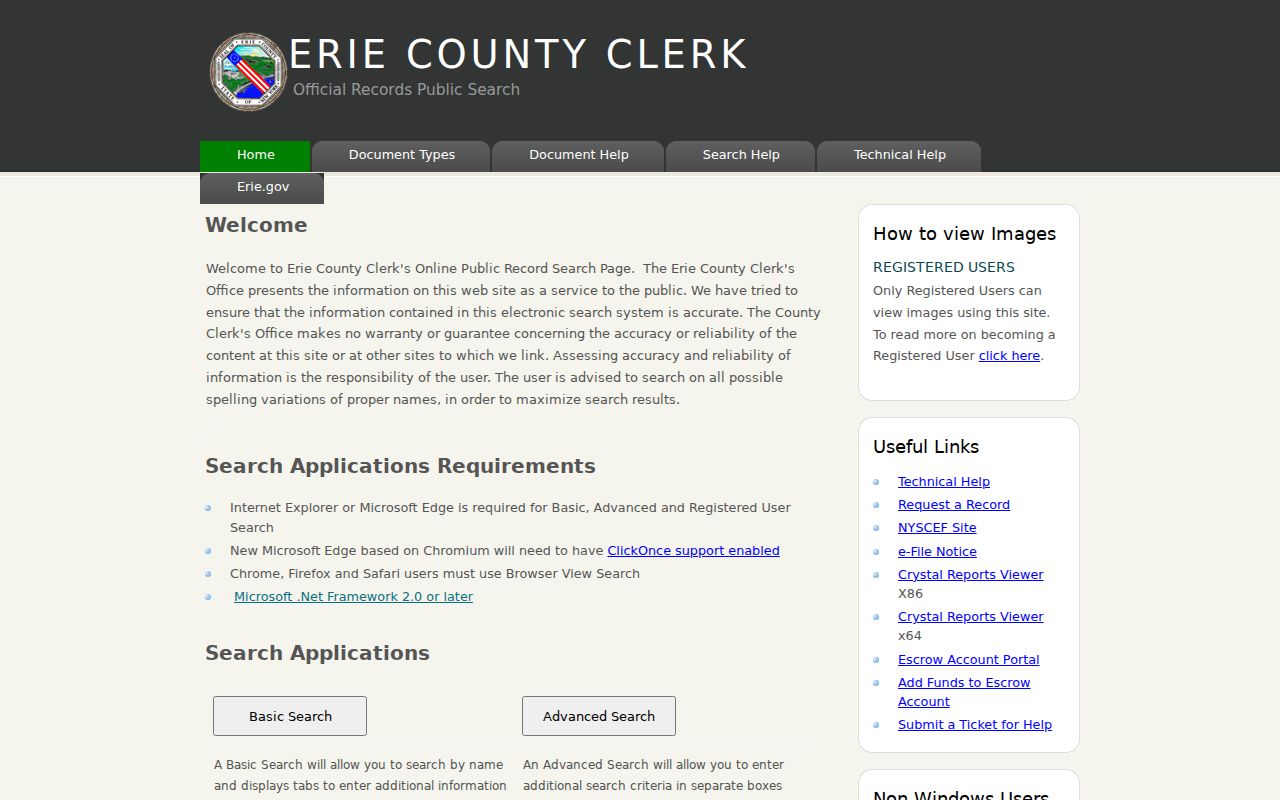
Match the parcel description and recording reference, not merely a similar name.
Entities That Own Erie County Land
Sometimes an LLC, corporation, trust, or estate stands where you expected a person. Search the exact grantee name on the deed. New York's Corporation and Business Entity Database can reveal an entity's legal name, organization date, and jurisdiction. It also lists the county, status, and service-of-process address. Still, it cannot prove that any listed individual owns the real estate. Trust details often live only in the deed or a recorded memorandum. Estate transfers may call for WebSurrogate and a later fiduciary deed.
Use records lawfully. Owner data supports title checks, boundary work, tax review, and property contact. It must not be used to stalk, harass, trespass, or defeat a protected address.