
How a Erie County Property Search Works
The Erie County SBL is the thread that ties everything together. Carry an address or owner result across Parcel Search, the Clerk index, Tax Inquiry, and On-Map without changing it. Each source answers a different part of the property search.
- Use the Erie County SBL to carry an address or owner result across Parcel Search, the Clerk index, Tax Inquiry, and On-Map. Each source answers a different part of the property search.]
- Use the Erie County SBL to carry an address or owner result across Parcel Search, the Clerk index, Tax Inquiry, and On-Map. Each source answers a different part of the property search.
- Use the Erie County SBL to carry an address or owner result across Parcel Search, the Clerk index, Tax Inquiry, and On-Map. Each source answers a different part of the property search.
- Use the Erie County SBL to carry an address or owner result across Parcel Search, the Clerk index, Tax Inquiry, and On-Map. Each source answers a different part of the property search.
- Use the Erie County SBL to carry an address or owner result across Parcel Search, the Clerk index, Tax Inquiry, and On-Map. Each source answers a different part of the property search.
What a Erie County Property Record Shows
One identifier drives the whole Erie County property search. The SBL links Parcel Search, the Clerk index, Tax Inquiry, and On-Map, so an address or owner result travels intact between them. Every source answers a different question about the parcel.
| Owner of Record | Use the Erie County SBL to carry an address or owner result across Parcel Search, the Clerk index, Tax Inquiry, and On-Map. Each source answers a different part of the property search. |
|---|---|
| Situs / Mailing Address | Use the Erie County SBL to carry an address or owner result across Parcel Search, the Clerk index, Tax Inquiry, and On-Map. Each source answers a different part of the property search. |
| Parcel Number (APN) | Use the Erie County SBL to carry an address or owner result across Parcel Search, the Clerk index, Tax Inquiry, and On-Map. Each source answers a different part of the property search. |
| Assessed / Market Value | Use the Erie County SBL to carry an address or owner result across Parcel Search, the Clerk index, Tax Inquiry, and On-Map. Each source answers a different part of the property search. |
| Legal Description | Use the Erie County SBL to carry an address or owner result across Parcel Search, the Clerk index, Tax Inquiry, and On-Map. Each source answers a different part of the property search. |
| Last Sale | Use the Erie County SBL to carry an address or owner result across Parcel Search, the Clerk index, Tax Inquiry, and On-Map. Each source answers a different part of the property search. |
Start with the SBL and the rest of the Erie County property search falls into place. Parcel Search, the Clerk index, Tax Inquiry, and On-Map all speak that same parcel language. Each one covers a different corner of the record.
Search by Address, Owner, or Parcel
Address, owner, or parcel number, the entry point matters less than the key underneath it. The Erie County SBL carries any of those results across Parcel Search, the Clerk index, Tax Inquiry, and On-Map. Each source handles one piece of the property search.
| Search Key | Best For | Where It Works | Watch Out |
|---|---|---|---|
| Address | Use the Erie County SBL to carry an address or owner result across Parcel Search, the Clerk index, Tax Inquiry, and On-Map. Each source answers a different part of the property search. | Use the Erie County SBL to carry an address or owner result across Parcel Search, the Clerk index, Tax Inquiry, and On-Map. Each source answers a different part of the property search. | Use the Erie County SBL to carry an address or owner result across Parcel Search, the Clerk index, Tax Inquiry, and On-Map. Each source answers a different part of the property search. |
| Owner name | Use the Erie County SBL to carry an address or owner result across Parcel Search, the Clerk index, Tax Inquiry, and On-Map. Each source answers a different part of the property search. | Use the Erie County SBL to carry an address or owner result across Parcel Search, the Clerk index, Tax Inquiry, and On-Map. Each source answers a different part of the property search. | Use the Erie County SBL to carry an address or owner result across Parcel Search, the Clerk index, Tax Inquiry, and On-Map. Each source answers a different part of the property search. |
| Parcel number | Use the Erie County SBL to carry an address or owner result across Parcel Search, the Clerk index, Tax Inquiry, and On-Map. Each source answers a different part of the property search. | Use the Erie County SBL to carry an address or owner result across Parcel Search, the Clerk index, Tax Inquiry, and On-Map. Each source answers a different part of the property search. | Use the Erie County SBL to carry an address or owner result across Parcel Search, the Clerk index, Tax Inquiry, and On-Map. Each source answers a different part of the property search. |
Not a title search. Use the Erie County SBL to carry an address or owner result across Parcel Search, the Clerk index, Tax Inquiry, and On-Map. Each source answers a different part of the property search.
Erie County Parcel Search Fields
An Erie County property search works best when each identifier travels with you to the next system. County Parcel Search accepts an owner name, a property location, or a tax identifier. Its result hands back the SBL, the municipal context, owner and assessment data, and a details route that can include a deed book and page. The Clerk index is the catch. It does not search land records by street address, so the bridge from address to owner or recording reference has to come from somewhere else.
| Search field | Best use | Practical check |
|---|---|---|
| Property location | Starting with a street address | Try the assessed format and municipality |
| Owner name | Finding parcels held by a person or entity | Test name and LLC variants |
| SBL or tax identifier | Matching one exact parcel | Keep punctuation and leading zeros |
The official county property-search page routes users to the current lookup.
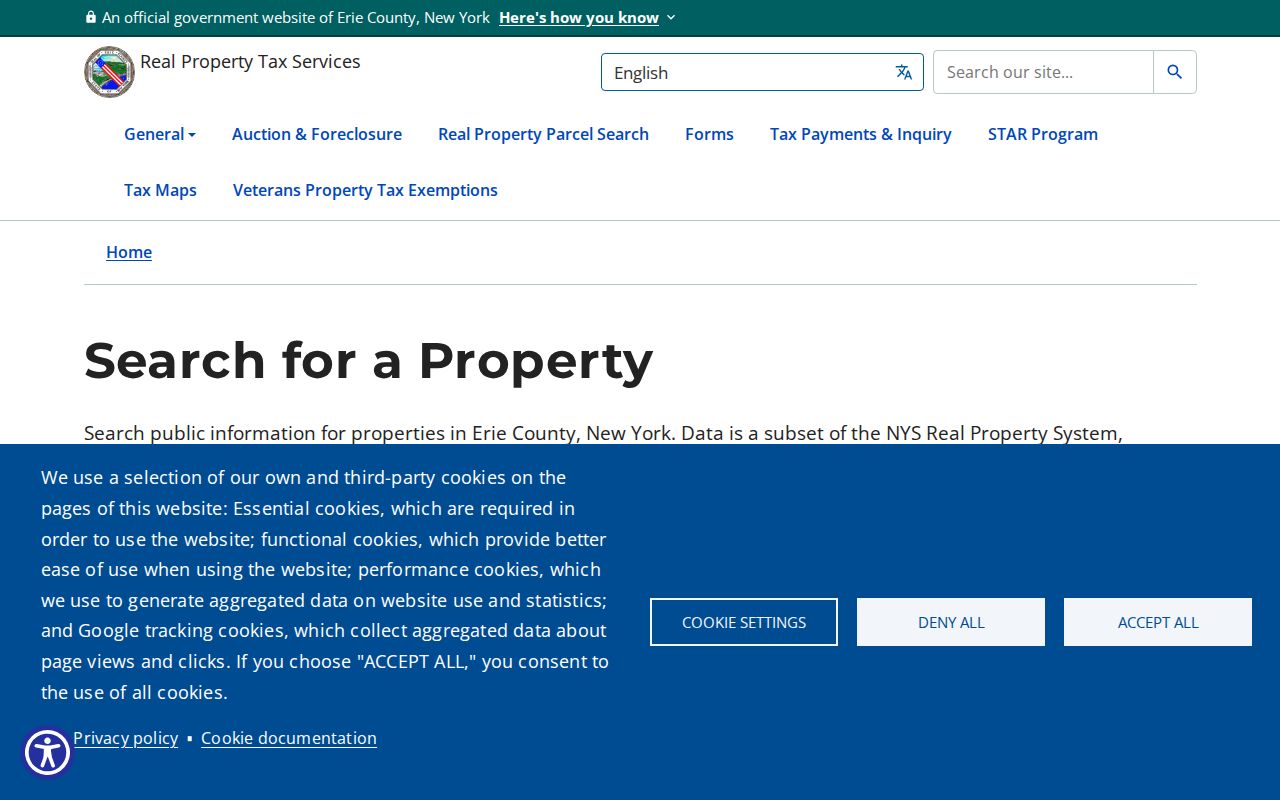
The landing screen keeps Parcel Search and Tax Inquiry visually separate, which stops a value lookup from being mistaken for a payment record.
Address Clues in Erie County
A situs address identifies the physical parcel. The mailing address shows where notices go. They can differ when the owner is an estate, trust, LLC, or lives elsewhere. A deed adds a third description. The deed can rest on a subdivision lot and block. It can also use metes and bounds. When a search fails, try the assessed street form, an alternate suffix, a spelled-out numbered street, and the correct city or town. Buffalo permit instructions, for instance, tell users to spell out numbered street names and use the correct ZIP.
ZIP codes are delivery zones, not municipal borders. A Buffalo or Tonawanda mailing label can mislead. It may point to a parcel assessed by a nearby town. On-Map's municipality polygon resolves the public-record jurisdiction. The SWIS/SBL does it more reliably than any postal city name. So preserve all three keys. Keep the assessed address, the SBL, and the deed book and page.
Reading an Erie Search Result
Parcel and GIS data can reveal the PIN, SBL, street fields, owner, mailing address, and acreage. It can also show the property class, school district, and a deed date. The full PIN begins with a six-digit SWIS code. That code sits ahead of the section, block, and lot data. Local displays shorten it into forms like 39.70-3-7 or 142.07-6-22. A parcel split or combination can create a new SBL. Hold on to the older deed's identifier while you trace the chain.
- SBL
- Section-block-lot, the local tax-map key.
- SWIS
- The municipal code used in New York assessment data.
- Situs
- The location of the land, which may differ from the owner's mailing address.
- Owner of record
- The name currently carried by the roll, subject to processing lag and deed confirmation.