
What Erie County Property Tax Records Show
A useful Erie County tax lookup starts with three anchors: the SBL, the municipality, and the roll year. Values, exemptions, bills, payments, and foreclosure status sit in related but separate property records, so match them carefully before drawing conclusions.
| Field | What It Shows | Where |
|---|---|---|
| Assessed value | Erie County tax and assessment entries must be matched by SBL, municipality, and roll year. Values, exemptions, bills, payments, and foreclosure status come from related but separate records. | Erie County tax and assessment entries must be matched by SBL, municipality, and roll year. Values, exemptions, bills, payments, and foreclosure status come from related but separate records. |
| Market / appraised value | Erie County tax and assessment entries must be matched by SBL, municipality, and roll year. Values, exemptions, bills, payments, and foreclosure status come from related but separate records. | Erie County tax and assessment entries must be matched by SBL, municipality, and roll year. Values, exemptions, bills, payments, and foreclosure status come from related but separate records. |
| Exemptions | Erie County tax and assessment entries must be matched by SBL, municipality, and roll year. Values, exemptions, bills, payments, and foreclosure status come from related but separate records. | Erie County tax and assessment entries must be matched by SBL, municipality, and roll year. Values, exemptions, bills, payments, and foreclosure status come from related but separate records. |
| Tax bill & status | Erie County tax and assessment entries must be matched by SBL, municipality, and roll year. Values, exemptions, bills, payments, and foreclosure status come from related but separate records. | Erie County tax and assessment entries must be matched by SBL, municipality, and roll year. Values, exemptions, bills, payments, and foreclosure status come from related but separate records. |
| Taxing districts | Erie County tax and assessment entries must be matched by SBL, municipality, and roll year. Values, exemptions, bills, payments, and foreclosure status come from related but separate records. | Erie County tax and assessment entries must be matched by SBL, municipality, and roll year. Values, exemptions, bills, payments, and foreclosure status come from related but separate records. |
Match every Erie County tax and assessment entry on three anchors: the SBL, the municipality, and the roll year. Assessed values, exemptions, bills, payments, and foreclosure status live in related but separate property records that must be read together.
Looking Up a Erie County Tax Bill
Before pulling an Erie County tax bill, nail down the SBL, the assessing municipality, and the roll year. The bill's values, exemptions, payments, and foreclosure status come from separate but connected property records.
- Erie County tax and assessment entries must be matched by SBL, municipality, and roll year. Values, exemptions, bills, payments, and foreclosure status come from related but separate records. by address or parcel]
- Erie County tax and assessment entries must be matched by SBL, municipality, and roll year. Values, exemptions, bills, payments, and foreclosure status come from related but separate records.
- Erie County tax and assessment entries must be matched by SBL, municipality, and roll year. Values, exemptions, bills, payments, and foreclosure status come from related but separate records.
- Erie County tax and assessment entries must be matched by SBL, municipality, and roll year. Values, exemptions, bills, payments, and foreclosure status come from related but separate records.
- Assessed value
- Erie County tax and assessment entries must be matched by SBL, municipality, and roll year. Values, exemptions, bills, payments, and foreclosure status come from related but separate records.
- Mill rate / levy
- Erie County tax and assessment entries must be matched by SBL, municipality, and roll year. Values, exemptions, bills, payments, and foreclosure status come from related but separate records.
- Homestead exemption
- Erie County tax and assessment entries must be matched by SBL, municipality, and roll year. Values, exemptions, bills, payments, and foreclosure status come from related but separate records.
- Tax lien
- Erie County tax and assessment entries must be matched by SBL, municipality, and roll year. Values, exemptions, bills, payments, and foreclosure status come from related but separate records.
Appealing a Erie County Assessment
An Erie County assessment appeal stands on clean matches: SBL, municipality, and roll year. The value you grieve, the exemptions applied, and any payments or foreclosure status come from separate property records that each tell part of the story.
Appeal window. Erie County tax and assessment entries must be matched by SBL, municipality, and roll year. Values, exemptions, bills, payments, and foreclosure status come from related but separate records. with the Erie County tax and assessment entries must be matched by SBL, municipality, and roll year. Values, exemptions, bills, payments, and foreclosure status come from related but separate records.; missing the window means waiting for the next cycle.]
Erie County Tax and Assessment Cycle
Erie County property tax records rest on two layers of work. Local assessing units set the values, while county systems handle the taxes. The assessing city, town, or village establishes the roll. County Real Property Tax Services maintains the shared maps and parcel tax information. The calendar matters too. For most towns, March 1 is the taxable-status and exemption date. May 1 brings the tentative roll. Grievance day follows later in May, and July 1 closes with the final roll. Buffalo, Lackawanna, and Tonawanda run on city schedules. Confirm the municipality and roll year before comparing values. The official Real Property Tax portal keeps parcel inquiry, tax inquiry, and payment in separate places.
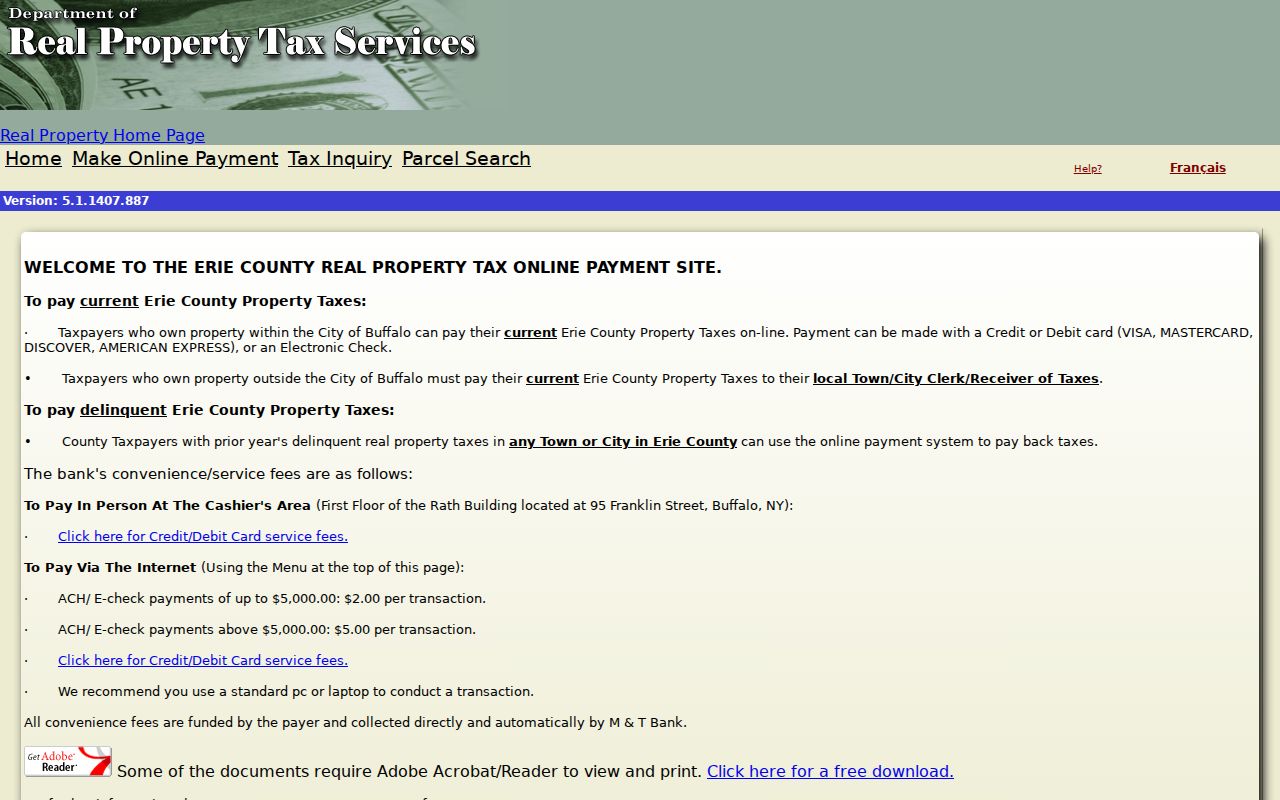
The portal's tabs let you tell a parcel assessment apart from a paid or delinquent tax record at a glance.
Erie County Delinquent Tax Records
Erie County foreclosure material covers In Rem packets, delinquent-tax lists, auction notices, and sale terms. Treat these as time-sensitive documents. They are not a substitute for the live tax account on the parcel. Scam warnings deserve attention here. Erie County states plainly that its staff will never ask for gift cards, cryptocurrency, online-banking credentials, or a Social Security number. If an urgent demand arrives by phone, verify it with Real Property Tax Services at the official number. Do not use any contact details the caller supplies. The county foreclosure page publishes the authoritative packets.
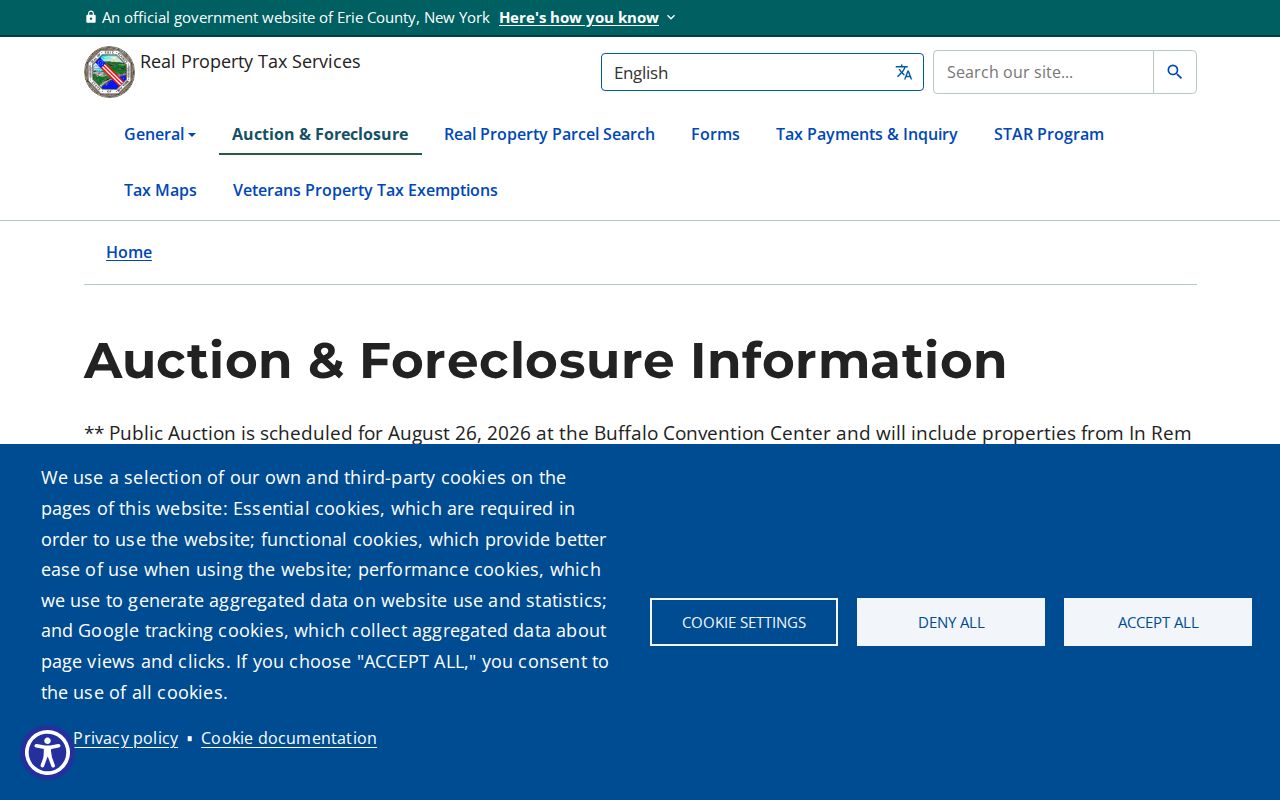
Read the SBL, municipality, tax year, and status as one picture. A later payment or court action can change what a delinquent listing means for the parcel.